Keith Edmier
Born in 1967 in Chicago, Illinois, United States, lives and works in New York, United States.Represented in 2026 by Petzel Gallery (New York).
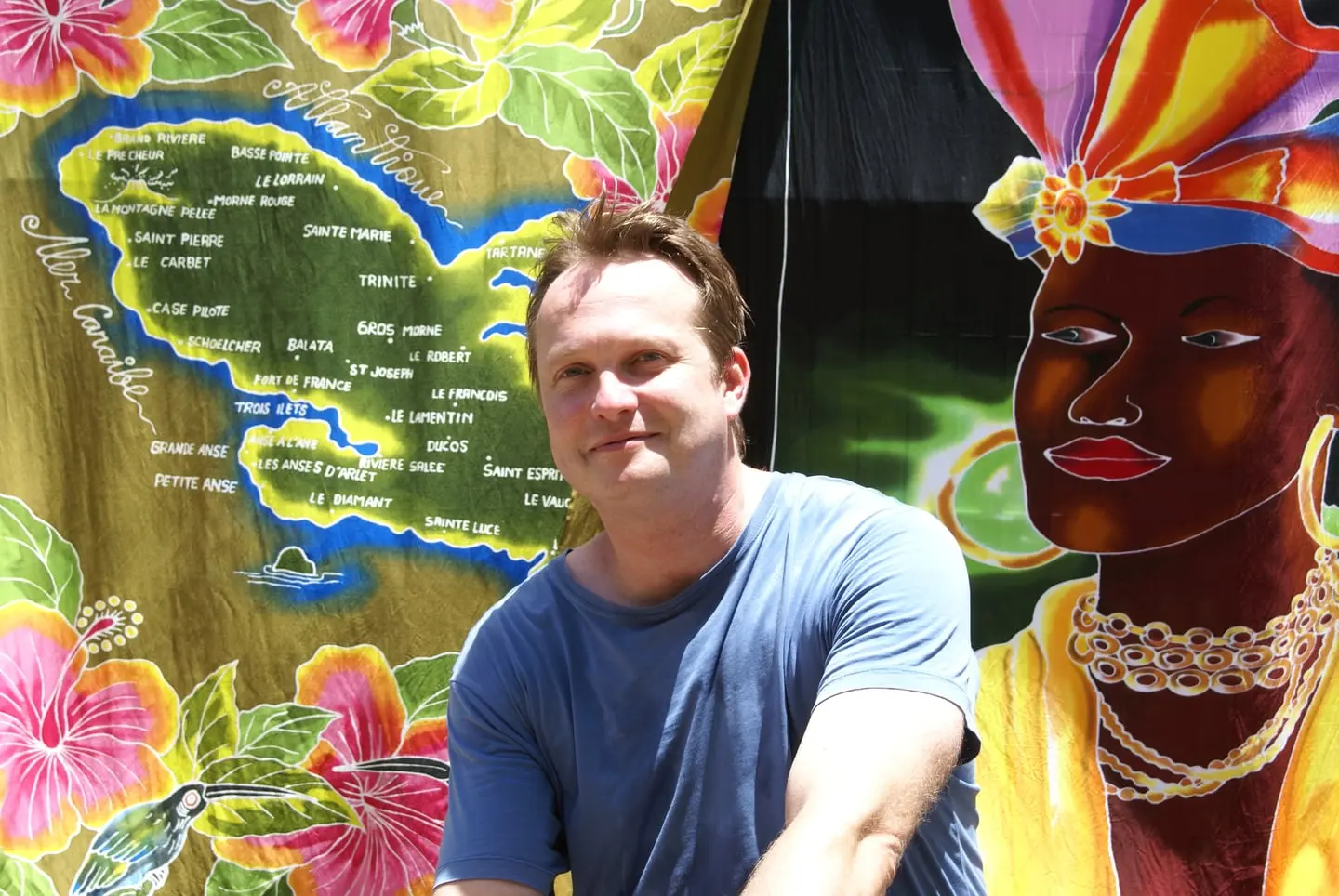
Residency context
Residency in August 2008.
Residency account
Born in 1967 in Chicago, Keith Edmier demonstrated a strong affinity for sculpture from an early age, self-baking clay masks and prosthetic objects inspired by monster and horror cinema. As a teenager, he worked as an assistant in a dental practice, where he became familiar with polymer resins used in dental prosthetics. He later worked as a special effects technician for David Cronenberg on the set of The Fly. It was only after completing his theoretical studies at the California Institute of the Arts—where he engaged with Neo-Conceptualism and Appropriation Art (broadly grouped under the term ‘Postmodernism’)—that his practice definitively shifted toward the visual arts, focusing on the three dominant themes of his oeuvre: eroticism, mortality, and autobiography.
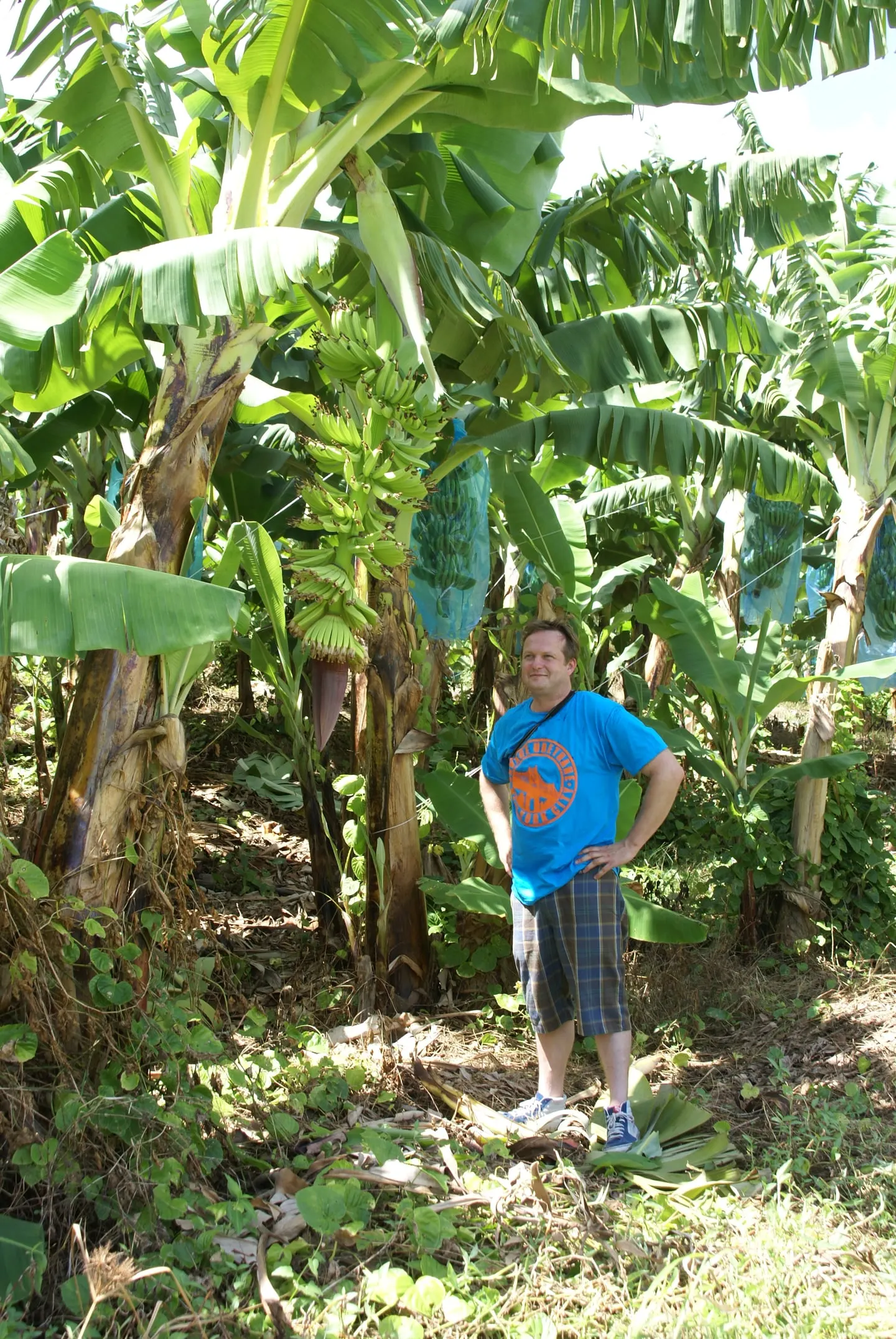
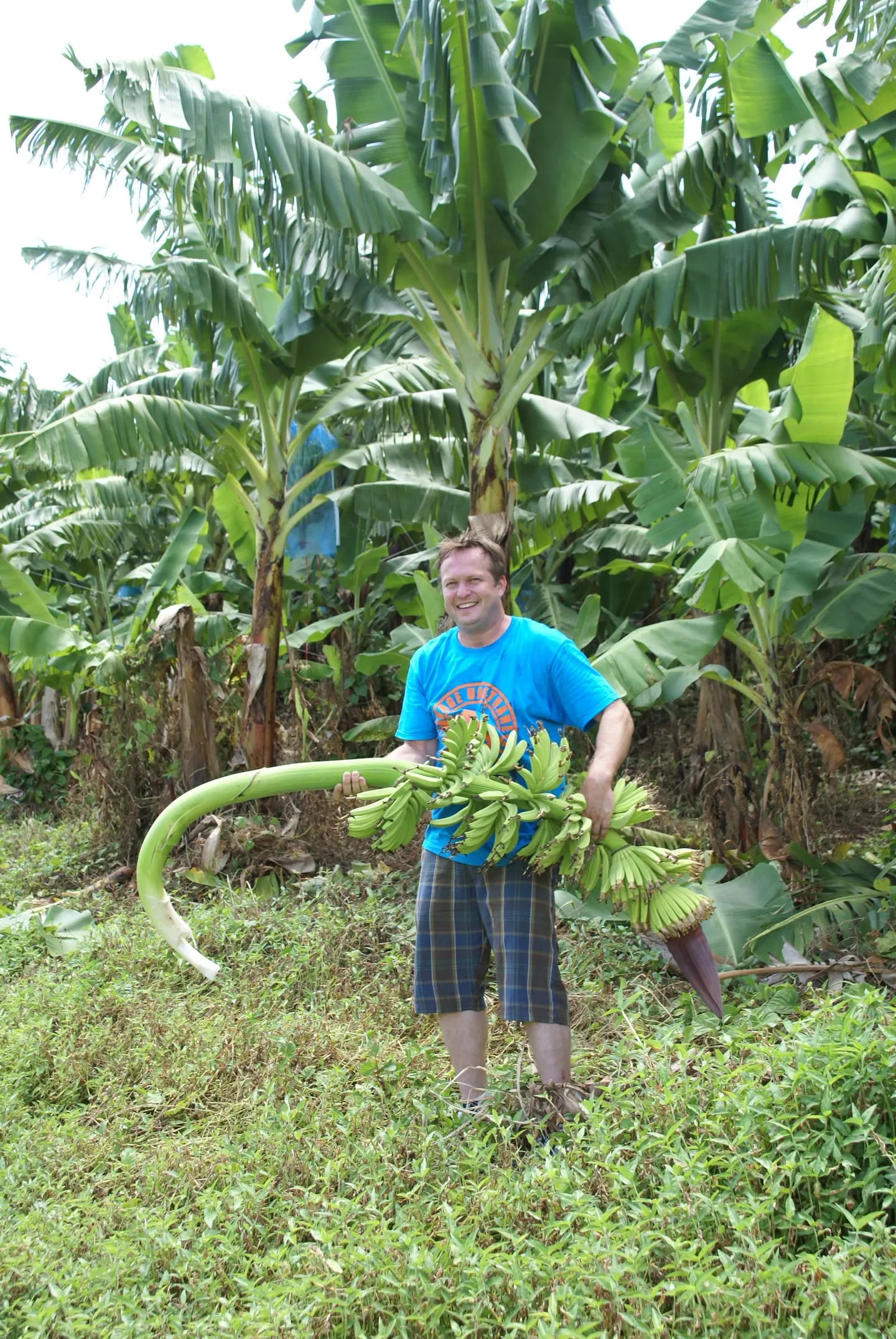
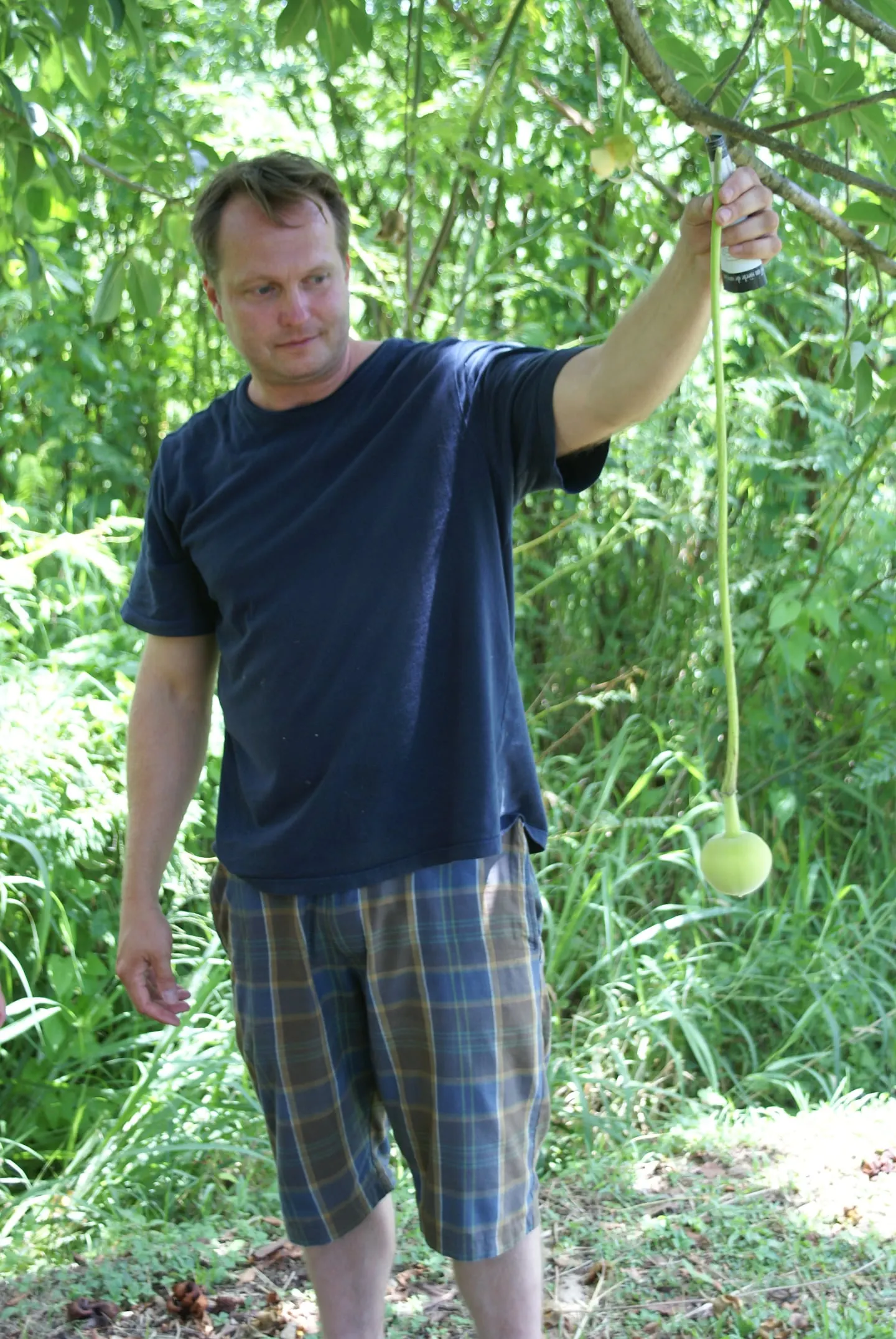
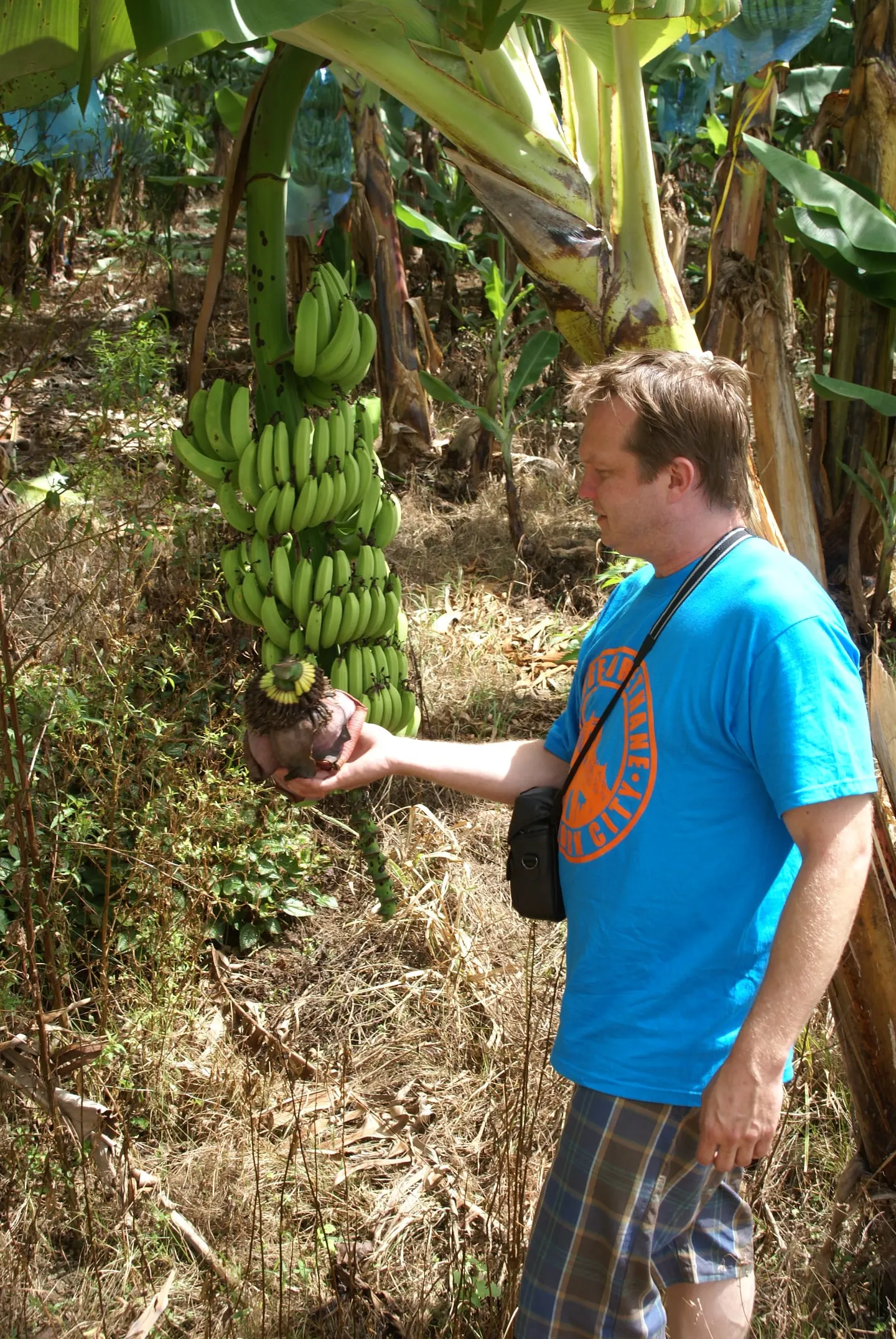
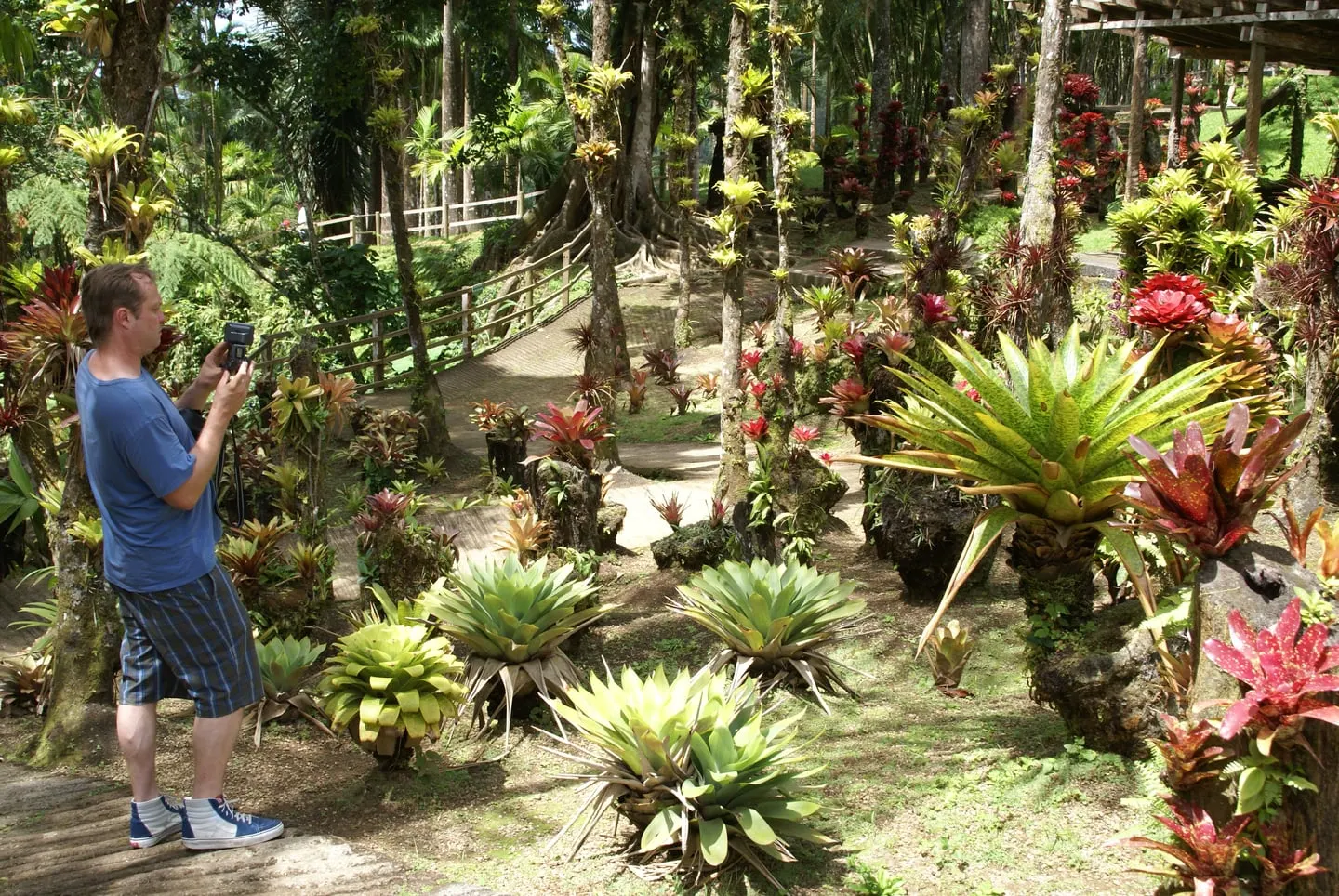
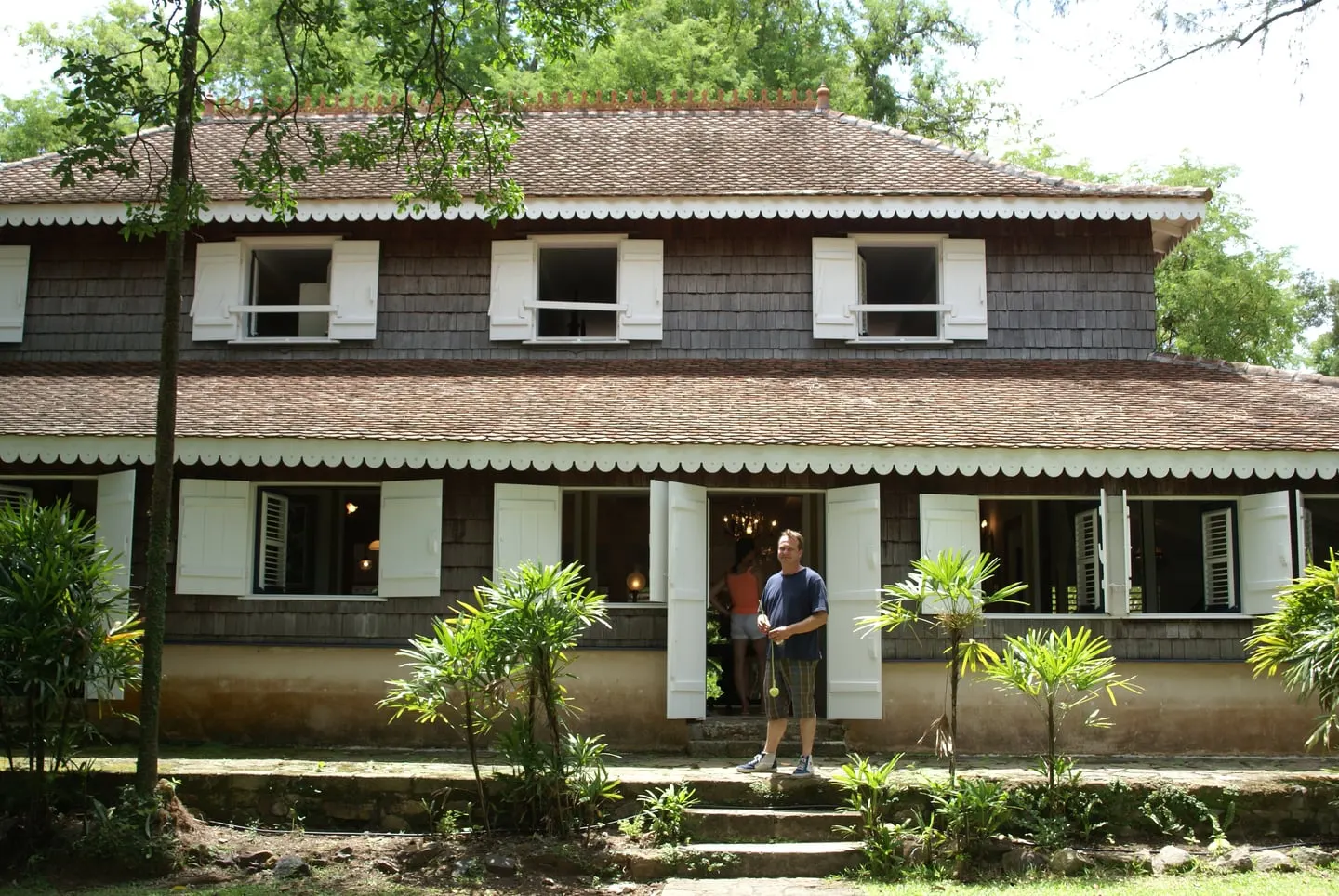
While in Martinique, Edmier was immediately captivated by the lushness and generosity of the local flora. For an artist based in New York City amid skyscrapers, this encounter with the Martinican land proved striking and revelatory. During a stroll through Habitation Clément in Le François, just off the beaten tourist path, his eye was drawn to a flower deeply familiar to Caribbeans, yet rarely scrutinized: the banana flower.
No artist before him had imbued this botanical form with such profound meaning. Generous and suggestive in shape, suspended vertically in mid-air like a heavy, motionless pendulum, marked by a unique purplish hue and impressive volume, the banana flower—far from resembling a conventional blossom—possessed all the qualities to become a muse for the sculptor.
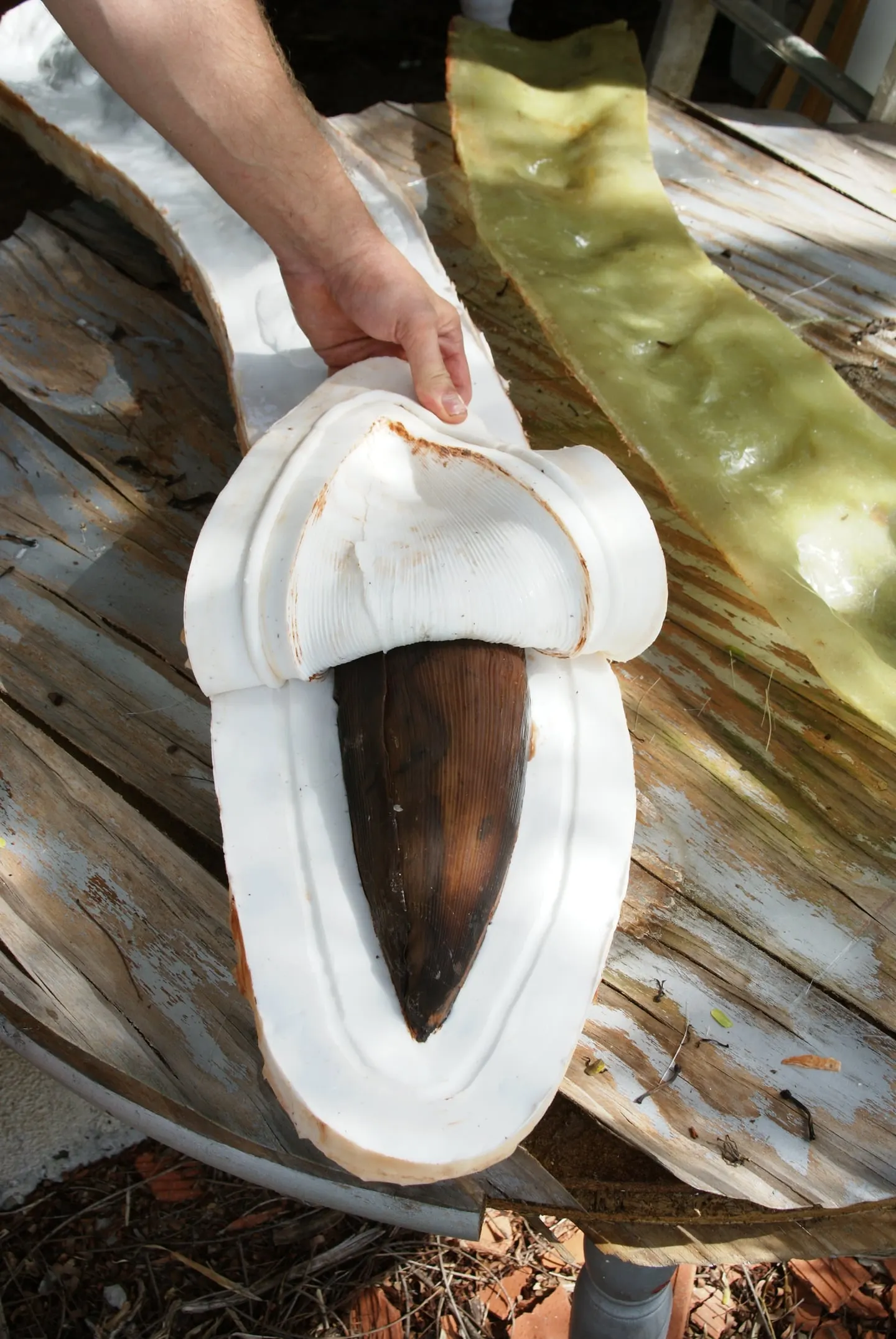
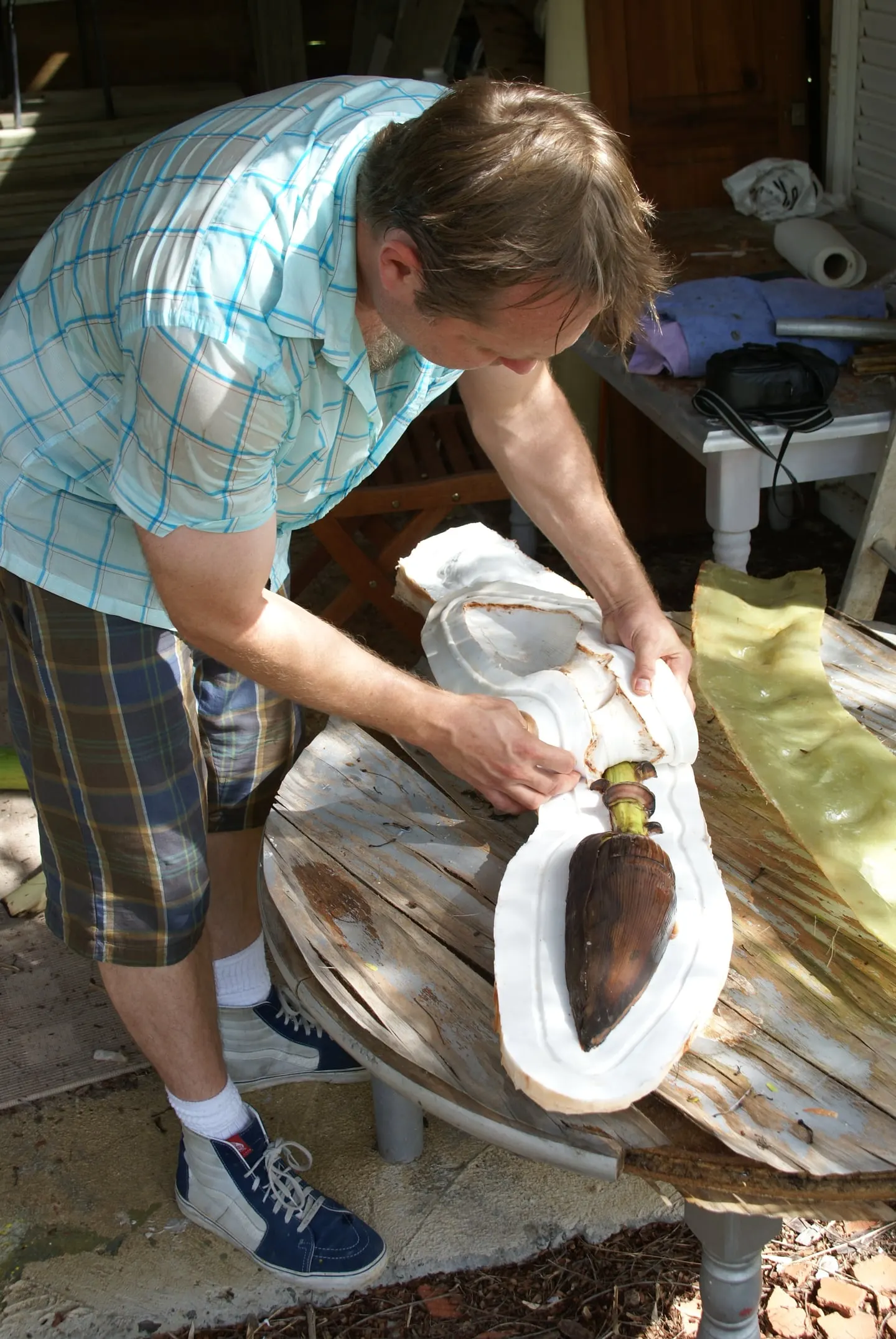
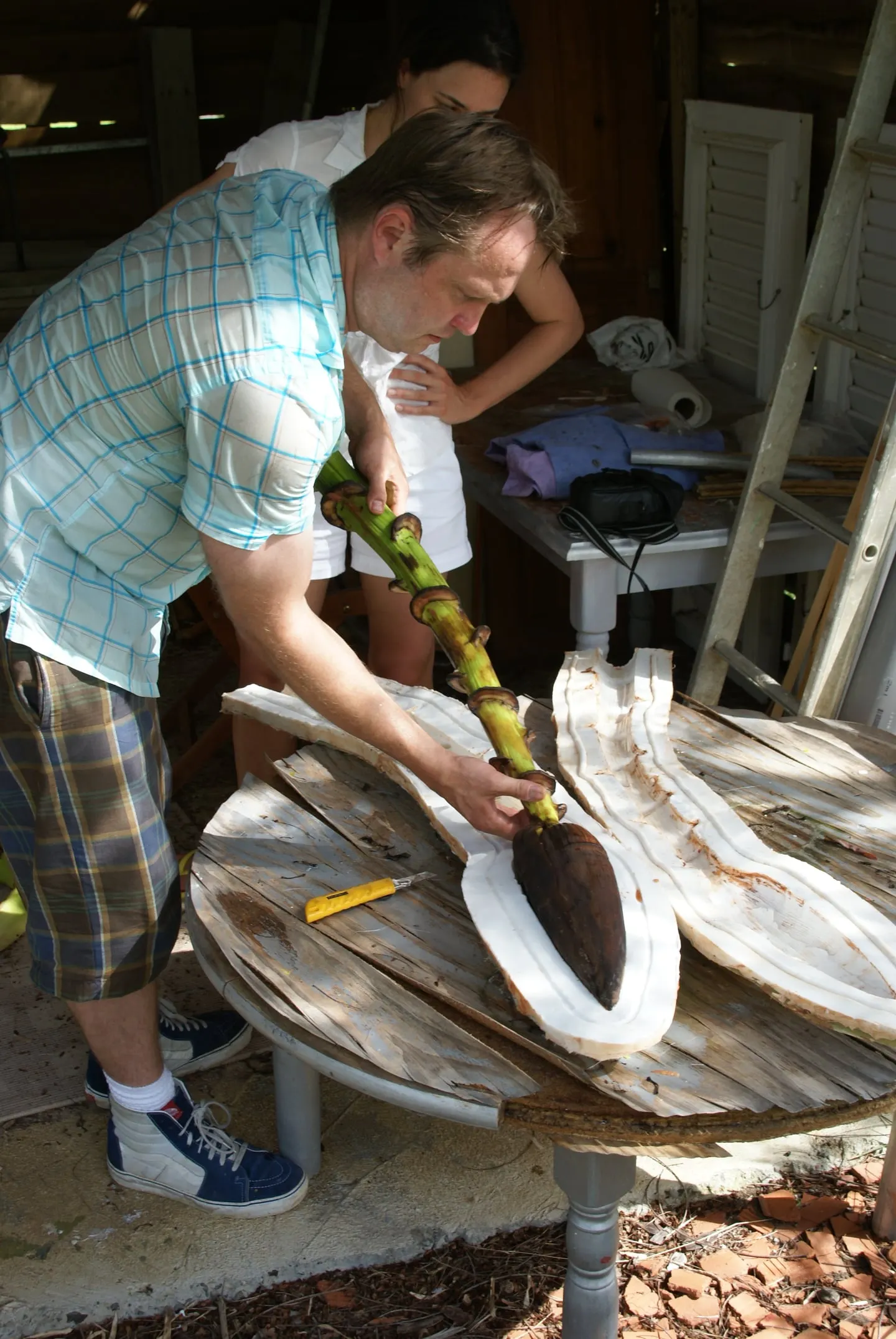
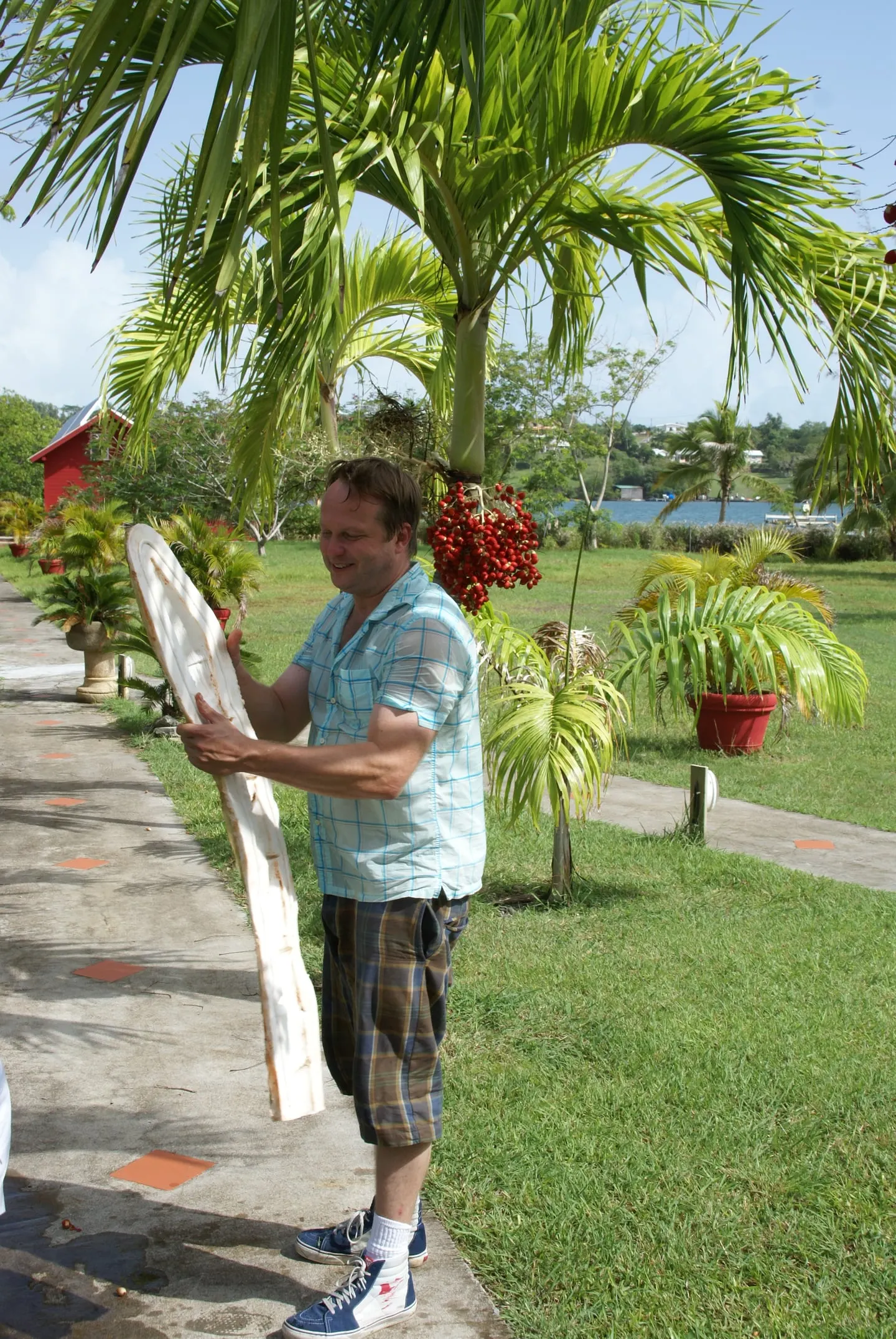
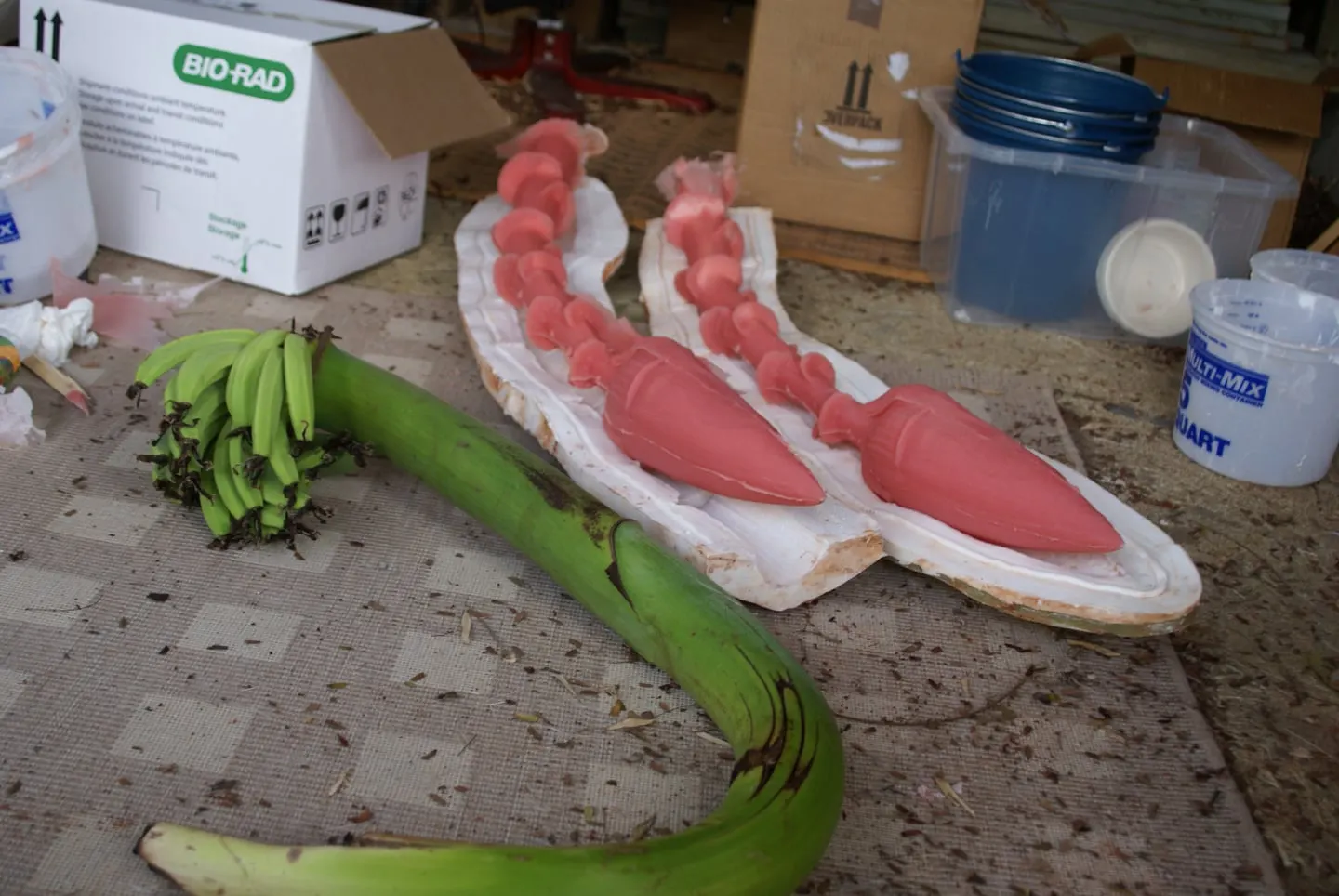
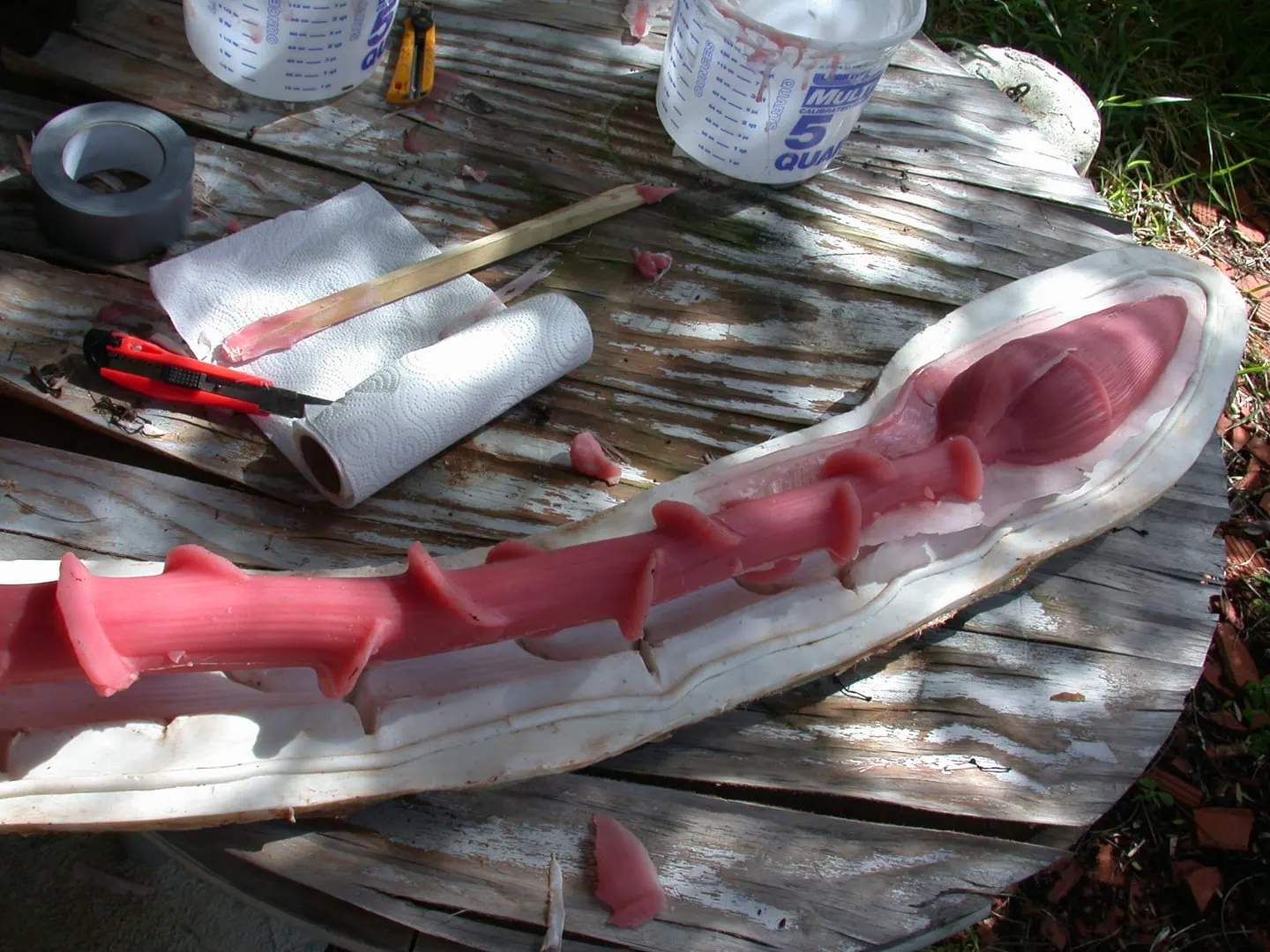
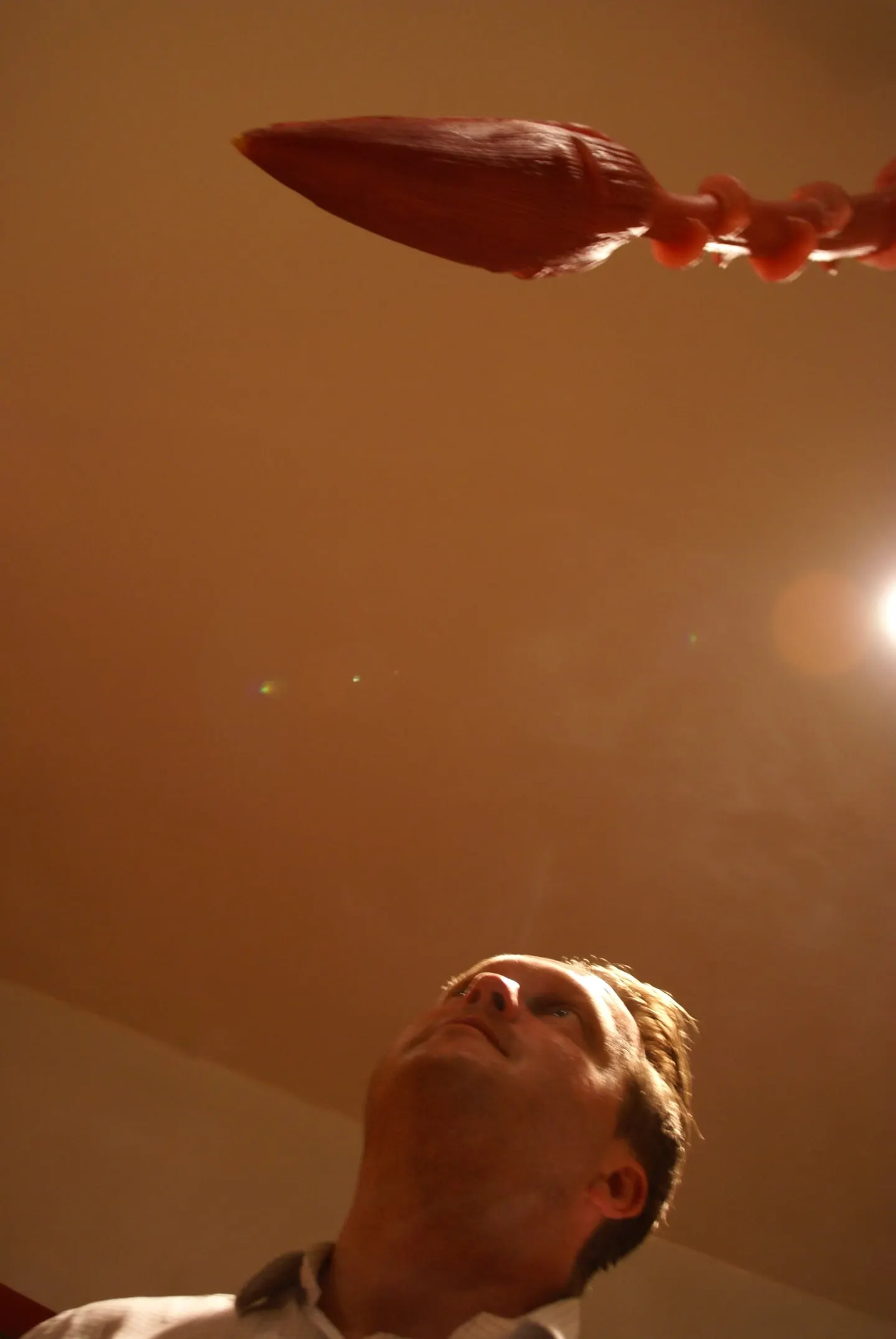
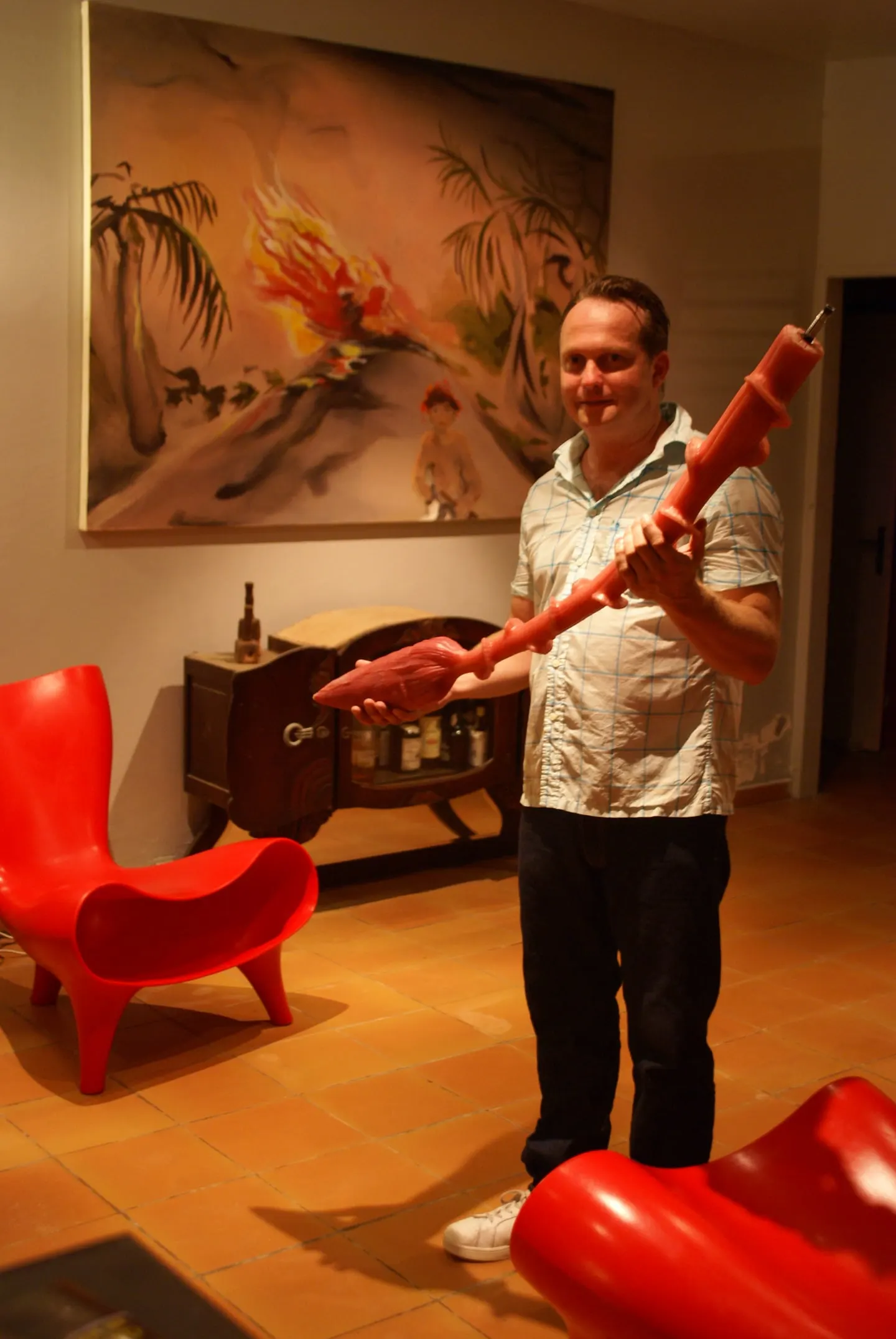
Once harvested and brought back to the residency studio, a moulding process using clay and polymer resin yielded the final sculpture. Visually recognizable at first glance, the work is nonetheless deeply unsettling and worlds apart from the original flower.
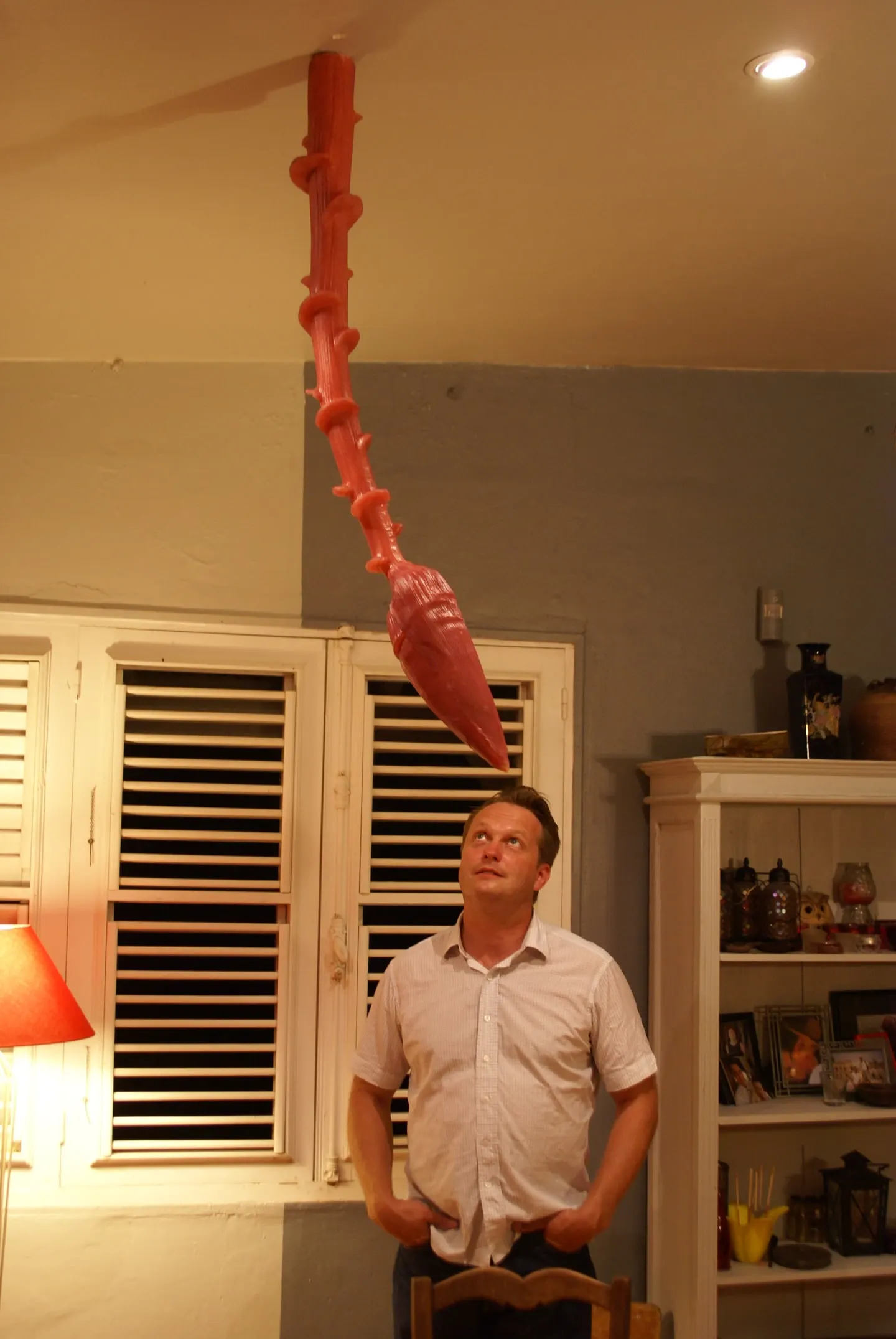
Indeed, the final piece fascinates as much as it disturbs. Though far removed from the initial blossom, the artist did not seek to sever ties with it entirely: the overall structure remains intact (stem and flower); the scale is preserved; and there is a noticeable absence of a pedestal or showcase. The work is meant to be displayed suspended from the ceiling, hanging vertically with its bulbous tip pointing toward the ground, mirroring its natural position on the parent plant.
Furthermore, the use of polymer resin—a common material in dental prosthetics often found throughout the American artist’s body of work—endows the sculpture with a monochrome pink tone. Seeking a sense of realism, however, Edmier subtly repainted the tip in a purplish shade, with the very end revealing a touch of yellow.
The work thus lingers close to reality while departing from it, resulting in a unique, hybrid object. The hands of fruit have been severed, their absence striking. The satin-pink surface dominating the sculpture lends it an ambiguous personality and an unsettling identity: one is drawn to its appearance of living (or dead?) flesh, reminiscent of muscle tissue, while feeling a certain unease before the almost extraterrestrial nature of the protruding shape. Ultimately, it exudes a distinct strangeness—erotic to some, macabre to others. ‘The devil’s tail!’ exclaimed some viewers…
In contrast to the living flower, the sculpted object exudes a profound ambiguity. It becomes evident that the artist’s intervention—his presence, however restrained—is embedded within the object left to the viewer’s gaze. Edmier has infused the sculpture with a fragment of his own intimacy, repressed thoughts, and memories, as if the banana flower, so ubiquitous in Martinique, vanished to become the emblem of a primal trauma.
This is manifest in the contrast between several elements: the delicacy of the pink (living flesh) versus the violence of the purple (decaying flesh); the femininity of the color palette versus the hardness of the material; the flower charged with prospective fruit versus the phallic presence of the overall form…
This striking ‘made-in-Martinique’ artwork invites meditation on the emergence of life, mortality, regeneration, sexuality, and childhood through the dynamics of mother/father and femininity/masculinity—themes central to this romantic American visual artist. Finally, through his choice of subject matter, materials, and palette, Keith Edmier invites us to perceive and experience the world around us differently—our familiar island landscape that we often cease to truly see.
Note the technical prowess achieved by Keith Edmier, who, in just two weeks, executed a work without technical compromise. The fabrication process mirrored the precise standards established in his New York studio.
Documentary gallery
Creations
Rights
Publication rights for the photographs confirmed by Frédéric Guilbaud on 26 September 2026.